
What’s In This Guide
- What Do You Need Before You Tile a Bathroom Floor?
- How to Tile a Bathroom Floor?
- What Are the Most Common Mistakes When You Install Bathroom Floor Tile?
- How Much Does It Cost to Tile a Bathroom Floor?
- When Should You Hire a Professional Tile Installer Instead of Doing It Yourself?
- Frequently Asked Questions
- Need Help With Bathroom Floor Tile Installation in Patterson, NY?
Quick Facts
- Proper preparation helps prevent tile and grout problems.
- A clear layout reduces waste and uneven tile lines.
- Bathroom floor tiling follows measuring, setting, cutting, grouting, and curing.
- Project cost depends on material quality, labor, layout, and floor condition.
- Professional installation is best for uneven floors, water damage, and complex layouts.
Tiling a bathroom floor can make the space look cleaner, feel more finished, and hold up better against daily moisture. For many Patterson, NY homeowners, the big question is not just how to lay bathroom floor tiles, but whether the project is worth tackling on their own.
Proper preparation, careful tile placement, and attention to detail during finishing can make the difference between a floor that lasts for years and one that develops problems over time.
Here are the key steps, common mistakes to avoid, cost considerations, and signs that it may be time to hire a professional tile installer.
What Do You Need Before You Tile a Bathroom Floor?
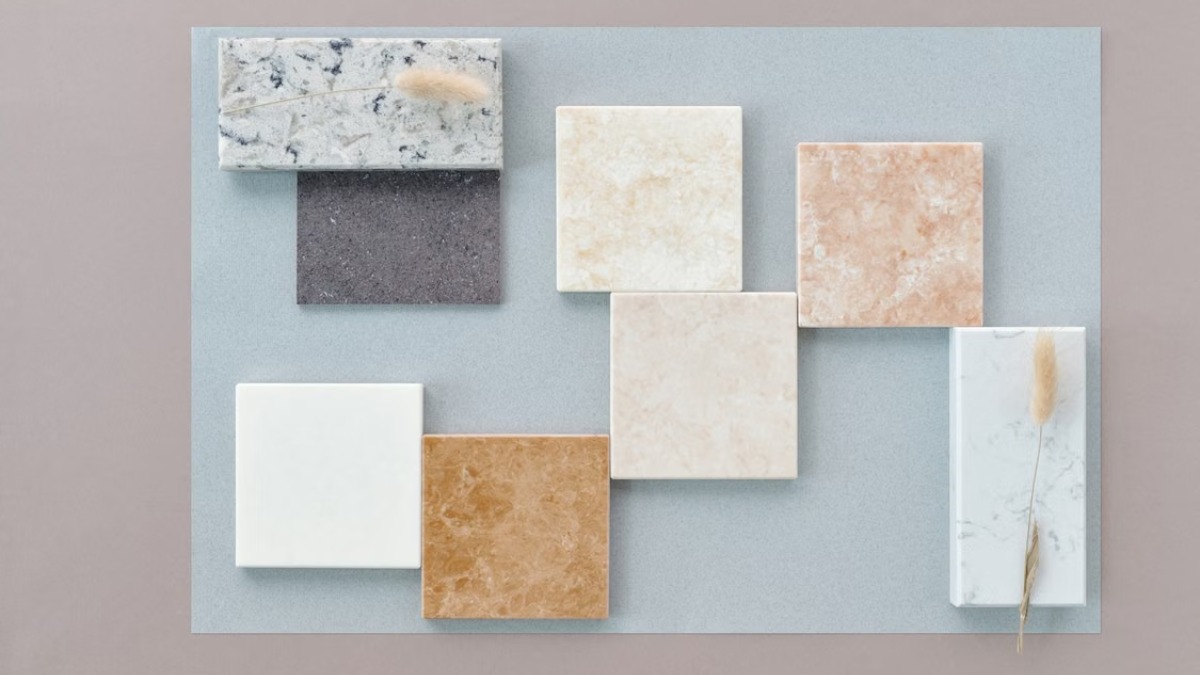
Bathroom floor tile installation requires proper tools, quality materials, and careful preparation. Most installation problems originate from inadequate planning rather than tile placement itself.
The Tile Council of North America (TCNA) identifies floor preparation as one of the most important factors in long-term tile performance.
Essential tools and materials include:
|
Tool or Material |
Purpose |
Required? |
|
Tile |
Floor surface |
Yes |
|
Thinset mortar |
Tile adhesion |
Yes |
|
Grout |
Joint filling |
Yes |
|
Tile spacers |
Consistent spacing |
Yes |
|
Notched trowel |
Mortar application |
Yes |
|
Tile cutter |
Tile cutting |
Yes |
|
Level |
Surface verification |
Yes |
|
Sponge and bucket |
Cleanup |
Yes |
|
Knee pads |
Comfort and safety |
Optional |
How Do You Prepare a Bathroom Floor for Tile Installation?
Bathroom floor preparation creates the foundation for successful tile installation. Uneven or damaged subfloors can cause cracked tiles and grout failure.
Before laying tile, inspect the floor for:
- Water damage
- Soft spots
- Uneven surfaces
- Loose plywood
- Existing structural movement
Preparation checklist:
- Remove old flooring.
- Clean all dust and debris.
- Repair damaged subfloor sections.
- Install cement backer board if needed.
- Verify floor levelness.
- Apply waterproofing products where appropriate.
How to Tile a Bathroom Floor?
Bathroom floor tile installation follows a structured process: measure, layout, install, cut, grout, and finish. Following each step carefully improves appearance and durability.
Step 1: Measure and Plan the Tile Layout
Measure the bathroom’s length and width, then find the center of the room and mark reference lines for tile placement. Dry-fit a few rows before applying mortar to see how the tiles will meet walls, fixtures, and doorways.
A good layout reduces narrow edge cuts, wasted tile, and uneven visual alignment.
Step 2: Apply Thinset and Lay Bathroom Floor Tiles
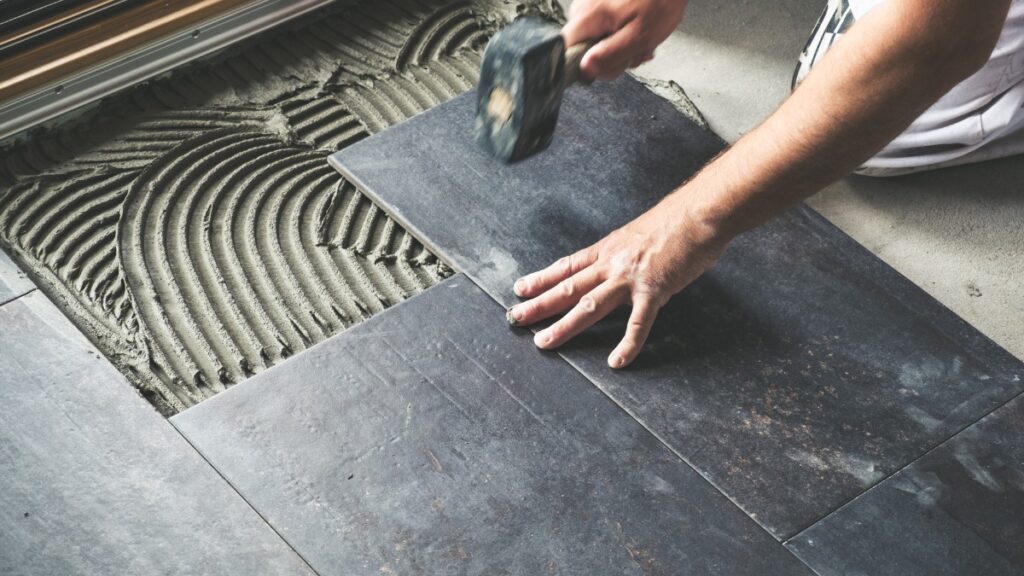
Mix thinset according to the manufacturer’s directions and spread it with a notched trowel. Work in small sections so the mortar stays workable, then press each tile into place with spacers for even grout joints.
Check alignment often with a level or straightedge. Remove excess mortar before it cures.
Step 3: Cut Tiles Around Fixtures and Edges
Cut tiles as needed around walls, doorways, toilet flanges, vents, and cabinetry. Straight cuts can often be made with a manual tile cutter, while corners or detailed cuts may require a wet saw, tile nippers, or an angle grinder.
Careful measuring helps reduce waste and prevents visible gaps around fixtures.
Step 4: Grout and Finish the Bathroom Floor Tile Installation
After the mortar cures, apply grout with a rubber float and press it fully into the joints. Wipe away excess grout with a damp sponge before it dries on the tile surface.
Mortar often needs about 24 hours before grouting, while grout may need 24 to 72 hours before normal use. Always follow the product instructions.
What Are the Most Common Mistakes When You Install Bathroom Floor Tile?
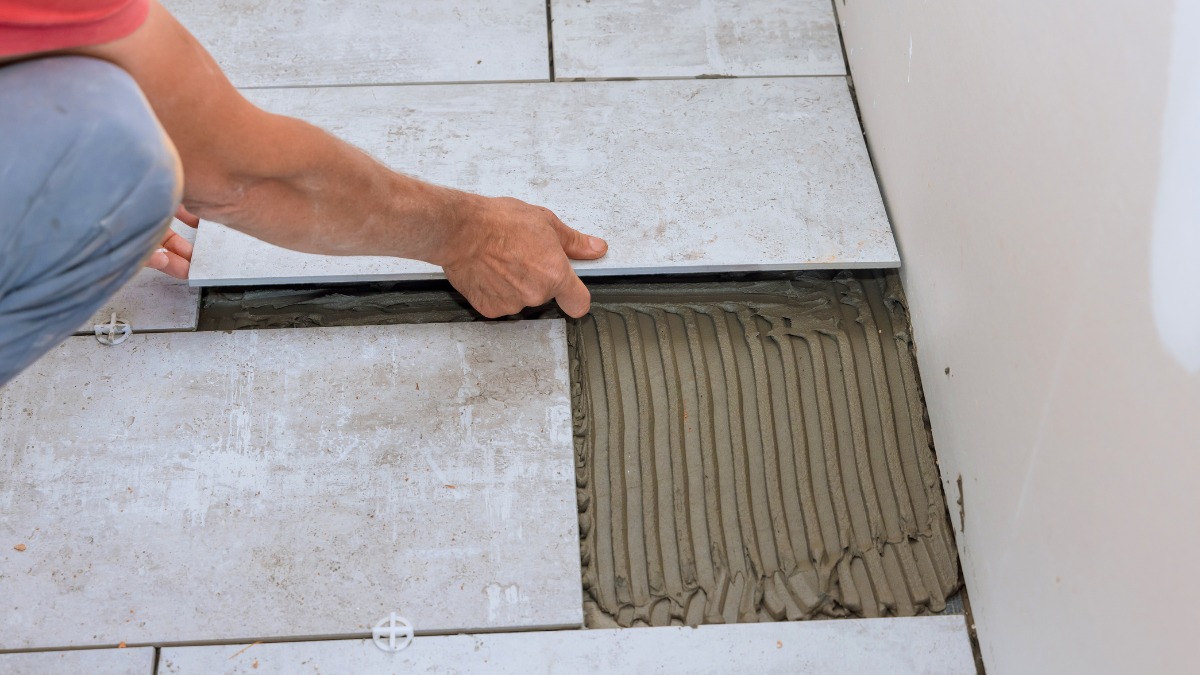
Most bathroom tile failures result from preparation errors, poor layout planning, or rushing the installation process.
Common mistakes include:
- Skipping floor leveling
- Inadequate subfloor inspection
- Incorrect mortar application
- Uneven tile spacing
- Walking on uncured tile
- Poor waterproofing practices
How Much Does It Cost to Tile a Bathroom Floor?
Bathroom tile installation usually costs around $2,100 on average, but pricing can vary widely. Basic projects with affordable materials may start near $120, while premium tile work or more complex bathroom installations can climb to $6,000 or higher.
The total cost to tile a bathroom floor depends on material quality, bathroom size, layout difficulty, labor, and any preparation needed before tile installation.
Is DIY Bathroom Floor Tiling Cheaper Than Hiring a Professional?
DIY installation can reduce labor costs, but mistakes can increase overall project expenses.
|
Factor |
DIY Installation |
Professional Installation |
|
Initial cost |
Lower |
Higher |
|
Time commitment |
High |
Low |
|
Learning curve |
Significant |
Minimal |
|
Risk of mistakes |
Higher |
Lower |
|
Finished consistency |
Variable |
Professional |
When Should You Hire a Professional Tile Installer Instead of Doing It Yourself?
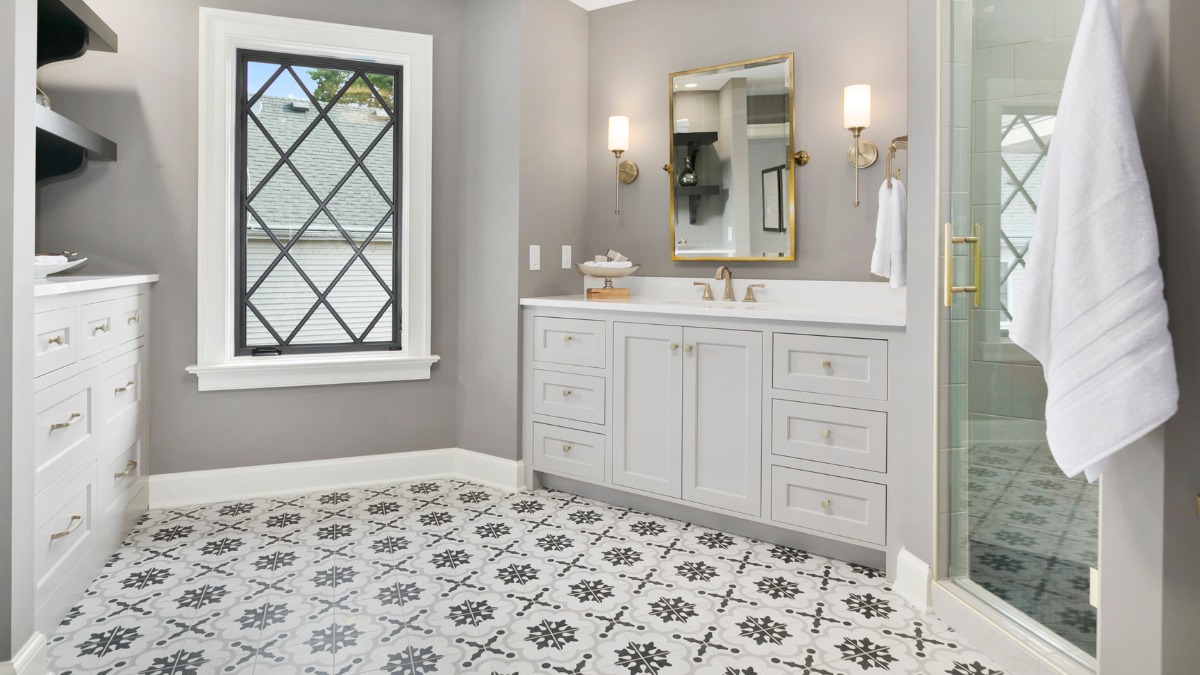
Professional tile installation becomes valuable when structural issues, waterproofing requirements, or complex layouts increase project difficulty.
Consider professional installation when:
- Subfloors are uneven.
- Water damage is present.
- Large-format tiles are used.
- Custom patterns are planned.
- Bathroom layouts are complex.
- Waterproofing systems are required.
Bathroom Tile Projects That Are Usually Too Difficult for DIY Installation
Some bathroom tile projects exceed the comfort level of most homeowners and benefit from professional expertise.
Examples include:
- Heated tile flooring systems
- Curbless shower transitions
- Natural stone installations
- Mosaic patterns
- Extensive floor repairs
- Structural subfloor corrections
Frequently Asked Questions
How long should bathroom floor tile last?
A properly installed bathroom tile floor can last for decades with routine care and maintenance. Following best practices for how to install bathroom floor tile helps improve durability and reduce the risk of premature damage. Tile quality, installation methods, and daily wear all affect lifespan. Regular cleaning and prompt repairs can help extend the life of the flooring.
Can bathroom floor tile increase home value?
Bathroom tile flooring is often viewed as a desirable feature by homebuyers. Durable, attractive flooring can improve the overall appearance of a bathroom and contribute to a home’s appeal. Updated bathrooms may also support higher resale value in competitive housing markets.
What is the easiest bathroom floor tile to maintain?
Porcelain tile is generally considered one of the easiest bathroom flooring materials to maintain. The dense surface resists moisture, stains, and everyday wear. Routine sweeping and occasional mopping are usually enough to keep porcelain tile looking clean.
What causes bathroom floor tiles to crack?
Cracked tiles can result from subfloor movement, heavy impacts, improper installation, or structural issues beneath the floor. In some cases, inadequate support or uneven surfaces place stress on the tile over time. Identifying the underlying cause is important before making repairs.
How do you keep bathroom floor tiles looking new?
Regular sweeping, prompt spill cleanup, and routine mopping help preserve the appearance of bathroom floor tiles. Using non-abrasive cleaning products can prevent surface damage. Addressing grout issues and replacing damaged tiles when needed also helps maintain a fresh appearance.
Need Help With Bathroom Floor Tile Installation in Patterson, NY?
A professionally installed tile floor can improve durability, moisture resistance, and the overall appearance of your bathroom. While some projects are suitable for DIY homeowners, complex layouts, subfloor issues, and waterproofing concerns often benefit from professional expertise.
Patterson’s Flooring Company provides bathroom tile installation services for homeowners throughout Patterson, NY. From floor preparation to final grout application, the team focuses on quality workmanship and long-lasting results.
Contact Patterson’s Flooring Company today to discuss your bathroom flooring project and request an estimate.