- Free Estimates

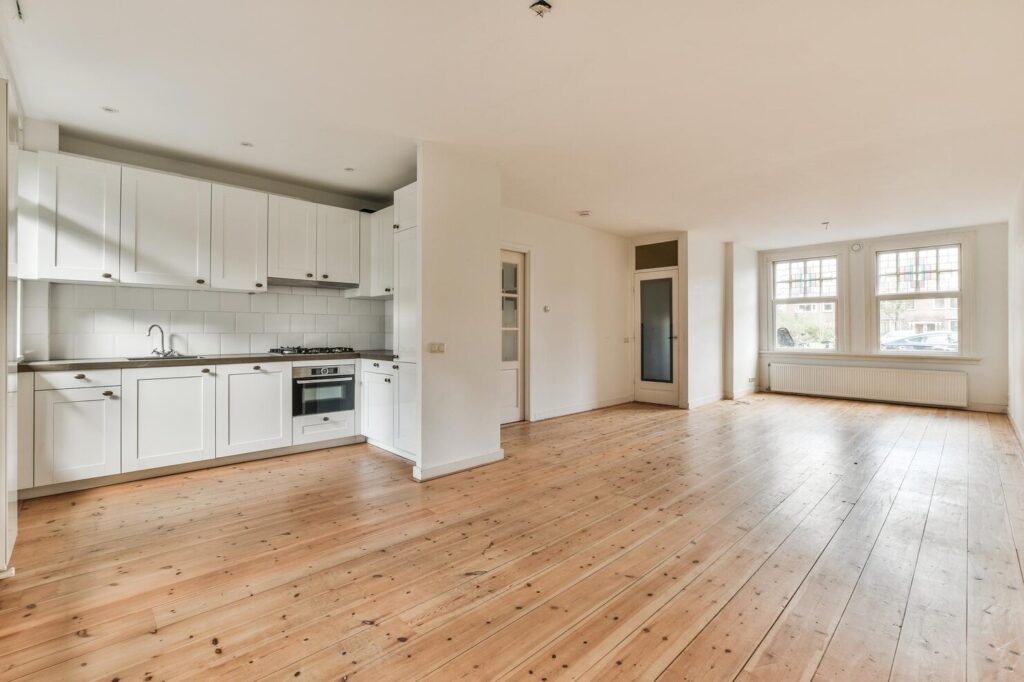
Laminate flooring for kitchen spaces has become a go-to choice for homeowners who want the look of hardwood or stone without the higher price tag or demanding upkeep.
That said, laminate isn’t perfect. Understanding its limitations is just as important as appreciating its advantages. It can be sensitive to water, it can’t be refinished if damaged, and without the right materials beneath it, it may sound louder or feel less stable underfoot.
Before you buy, here’s what every homeowner should know about laminate flooring in the kitchen.
Key Takeaways✔ Laminate flooring for kitchen spaces offers strong value by combining realistic design, durability, and lower cost than hardwood or tile. ✔ While modern laminate is water-resistant, it is not fully waterproof and is unsuitable for environments where homeowners often ask, can you use laminate flooring outside. ✔ Choosing kitchen-rated laminate with higher AC ratings and thicker planks improves performance and longevity. ✔ Professional flooring contractors play a key role in proper installation, noise reduction, and long-term durability. ✔ With the right product and installation, laminate can be a practical and well-designed option—even in higher-end kitchens. |
Laminate offers the look of hardwood or tile at a lower price point, making it a practical choice for kitchen renovations where budgets can add up quickly.
Modern laminate closely mimics natural wood and stone thanks to advanced printing and texturing, making it easy to fit both traditional and contemporary kitchen designs.
A strong wear layer helps resist scratches, scuffs, and fading. When properly installed, laminate flooring for kitchen spaces holds up well to daily activity.
Floating floor systems allow for faster installation with less disruption. Skilled flooring contractors ensure proper spacing and alignment, which directly impacts performance and lifespan.
Laminate requires no sealing or refinishing—just regular sweeping and occasional damp mopping for everyday care.

Flooring experts consistently rank tile and waterproof vinyl among the top kitchen flooring options because they offer true protection against spills and standing water. In contrast, laminate flooring is considered a more budget-friendly option with lower moisture tolerance.
Once damaged, laminate must be replaced rather than refinished, making product quality and installation especially important.
Without proper underlayment, laminate may sound hollow. Professional installation helps reduce noise and improve comfort underfoot.
Dropped objects or heavy appliances can damage edges and seams. While durable, laminate isn’t immune to impact damage.
Not all laminate is created equal. Always choose laminate flooring for kitchen use that is rated specifically for kitchens. These products offer improved moisture resistance and stronger wear layers.
Thicker laminate generally feels more solid underfoot and offers better sound absorption. Thickness also affects durability, especially in high-traffic kitchen zones.
Underlayment plays a major role in moisture protection, noise reduction, and comfort. Skipping or cheaping out on this layer often leads to problems down the road.
Even the best laminate flooring for kitchen applications can fail if installed incorrectly. Working with experienced flooring contractors ensures proper subfloor preparation and protects manufacturer warranties.
If damage occurs, individual planks can sometimes be replaced—but access depends on layout and installation method. Planning ahead matters.
The best laminate flooring for kitchen spaces is designed for durability and moisture resistance. Not all laminate meets those standards.
What to look for:
There’s no hard rule—contrast is key.
Laminate works well in kitchens—but not in high-moisture or extreme environments.
Avoid laminate in:
For outdoor areas, a common question is can you use laminate flooring outside? The answer is no. Laminate is not built for weather, UV exposure, or temperature changes.
If you’re wondering can you use laminate flooring outside on a porch, patio, or sunroom, manufacturers and flooring contractors consistently advise against it due to the high risk of warping and failure.
Yes—when used intentionally.
Laminate flooring for kitchen spaces appears in high-end homes where durability, design consistency, and low maintenance matter more than traditional materials.
It’s commonly used in:
Yes. Quality laminate flooring for kitchen spaces has a durable wear layer that resists scratches and stains, making it a practical choice for homes with pets and kids when installed by experienced flooring contractors.
With proper installation and care, laminate flooring for kitchen environments can last 15–25 years, depending on product quality, foot traffic, and moisture exposure.
Most modern laminate flooring for kitchen use includes textured or matte finishes that improve traction. Choosing the right finish and professional installation helps reduce slip risk.
Laminate flooring on walls can work well as an accent feature or island wrap when installed correctly. It adds warmth and texture but should be professionally installed for safety and durability.
Absolutely. Experienced flooring contractors can evaluate your kitchen layout, moisture levels, and lifestyle needs to help you decide between laminate vs linoleum or other flooring options.

Laminate flooring for kitchen projects and laminate flooring on walls can be a smart, stylish choice—when done right.
At Patterson’s Flooring Company, we’ve helped homeowners navigate these decisions with honesty and experience. As local flooring contractors in Patterson, NY, we understand regional climate factors, subfloor conditions, and how kitchens are actually used, not just how they look online.
Contact us today to learn more.