- Free Estimates

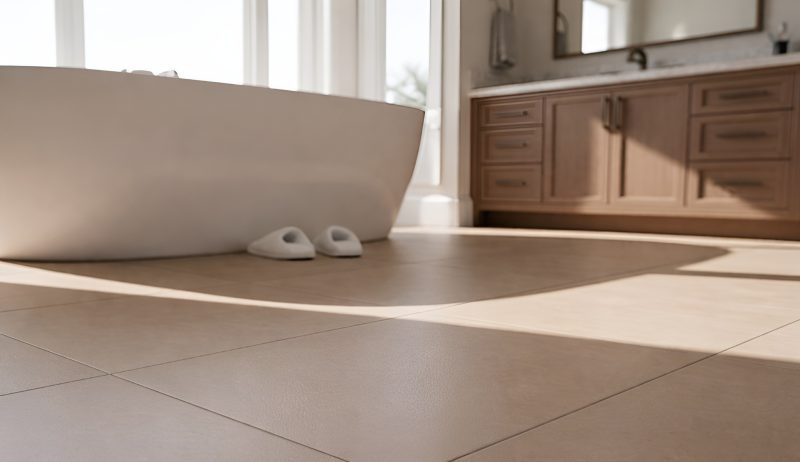
For most homes, the best tile for bathroom floor performance in 2026 is porcelain with a matte or lightly textured finish, installed on a properly prepped subfloor. Porcelain is defined as ceramic tile with water absorption of 0.5% or less (ASTM C373), which is why it holds up in wet, steamy rooms. Trend reporting for 2026 points to warmer, more personal bathrooms, where tile does double duty as a hard-working surface and a style statement. In 2026, better testing and bolder design make choosing easier today.
Key Takeaways✔ Porcelain is the safest default for a bathroom tile floor because it is low absorption. ✔ Ask about slip testing and choose a traction-friendly finish. ✔ Large-format tile looks clean, but prep matters. ✔ Ventilation and humidity control protect grout and reduce mold risk. ✔ Get a site-based quote because prep drives cost swings. |

Ask for slip-resistance data and choose a tile intended for wet floors, not just walls. The Tile Council of North America (TCNA) notes ANSI A326.3 as the standard test method for measuring the Dynamic Coefficient of Friction (DCOF), with guidance for product use classifications. In practice, matte or textured finishes tend to be more forgiving when water hits the floor.
Bathrooms see grit, dropped items, and frequent cleaning. Denser bodies and quality glazes resist chips and visible wear longer, especially in a main bath.
Tile wipes clean, but grout can hold moisture. The U.S. Environmental Protection Agency (EPA) suggests keeping indoor humidity below 60% and ideally between 30% and 50% to help prevent mold problems. Ventilation and the right grout choice matter as much as the tile.
Porcelain is the safest all-around pick: low absorption, durable, and available in stone and concrete looks. If you want the “best bathroom floor tile” with fewer compromises, start here.
Ceramic tile for bathroom floor projects can be a smart value in powder rooms or light-use baths. It delivers true tile style, but is generally less dense than porcelain, so impact resistance can be lower.
Natural stone is showing up in 2026 trend coverage, especially warm stone and tumbled looks. Stone often needs sealing and gentle cleaners, so choose it when you are comfortable with upkeep.
Luxury vinyl tile can feel softer underfoot, but tile still leads for long-term durability and classic resale appeal in many bathrooms.
Large-format tile reduces grout lines and can make small bathrooms feel calmer. It also demands a flatter floor, so flooring installation quality becomes more important.
Mosaics work well where traction and drainage matter, especially in shower floors. Use them strategically since more grout lines also mean more cleaning.
2026 trend reporting highlights earthy palettes and personalization. Warm grays, sand, and clay tones hide water spots better than stark extremes.
Matte finishes are usually better for bathroom floors because they reduce glare and tend to be less slick when damp. Polished looks sleek but shows spots and can feel slippery in socks.
Texture is the low-risk upgrade: gentle stone veining, handmade-style variation, or a quiet pattern that reads custom without being loud.
Choose the floor first, then pull one detail up the wall, such as undertone, veining, or finish family. This keeps the room cohesive without matching everything.
Artful tile and handmade-style looks are trending, often as an accent instead of full coverage. Vertical stacking can also make ceilings feel taller.

Tile does not like movement. A flat, stable subfloor and correct waterproofing details protect grout lines, corners, and transitions.
The best tile for bathroom floor use can still fail on a bad base. Skilled local installers catch issues early and keep the system working as designed.
National guides show wide ranges for ceramic and porcelain, depending on quality and format. Natural stone typically costs more and may require ongoing maintenance.
Costs rise with demolition, subfloor repairs, waterproofing, and complex layouts. This Old House notes broad ranges for professional ceramic tile installation, which is why an in-home evaluation is the best way to budget accurately.
Porcelain tile is the best overall choice for a bathroom floor because it absorbs very little water, resists wear, and holds up well to daily moisture and foot traffic.
Most homeowners can expect to pay between $10 and $25 per square foot installed, depending on tile material, bathroom size, and subfloor preparation needs.
Yes. Tile is durable, water-resistant, easy to clean, and adds long-term value, making it one of the most practical flooring options for bathrooms.
Common mistakes include poor subfloor prep, skipping waterproofing, using the wrong mortar, uneven spacing, and rushing grout or cure times.
Herringbone is one of the most difficult patterns because it requires precise layout, consistent cuts, and a perfectly flat surface to avoid visible alignment errors.
Patterson-area homes often require careful subfloor evaluation before new tile goes down. Getting the bathroom tile floor right means matching tile choice to moisture, traction, and daily use, then executing flooring installation with tight tolerances.
Bring your inspiration photos and how your bathroom is used day to day. Patterson’s Flooring Company can help you compare tile for bathroom floor options, coordinate the best tiles for bathroom walls, and plan flooring installation that fits your home in Patterson, NY.