
What’s In This Guide
- 1. Confirm the Contractor’s Full-Service Scope
- 2. Match Experience to the Flooring Material
- 3. Ask Exactly How the Subfloor Will Be Prepared
- 4. Verify Local Registration and Insurance
- 5. Compare Written Estimates Line by Line
- 6. Evaluate Communication Before Work Begins
- 7. Look for the Right Residential or Commercial Experience
- How to Compare Flooring Contractors Step by Step
- Frequently Asked Questions
- Choose a Patterson Flooring Contractor With Confidence
A successful flooring project depends on more than the material itself. Accurate measurements, proper subfloor preparation, product knowledge, layout planning, and clear communication all influence the final result. Patterson property owners can use these seven checks to distinguish a qualified flooring professional from an installer who may overlook important details.
Quick Facts
- Confirm that the contractor handles your flooring material and every required service.
- Ask how the crew will inspect, prepare, level, and protect the subfloor.
- Verify current Putnam County registration and appropriate insurance before signing.
- Compare detailed written estimates, not just bottom-line prices.
- Choose a contractor whose experience matches the demands of your residential or commercial project.
1. Confirm the Contractor’s Full-Service Scope
Start by defining the complete scope of the job. Determine whether it includes removing existing flooring, moving furniture, disposing of debris, repairing the subfloor, installing transitions, replacing trim, or applying a finish. Some contractors handle only the flooring installation, while others manage preparation, installation, and finishing.
Confirm who will handle each task and whether subcontractors will be involved. A clearly defined scope can prevent delays and unexpected charges. Choose a contractor with experience in the material and services your project requires, whether that includes wood, tile, vinyl, concrete, epoxy, repairs, maintenance, or refinishing.
2. Match Experience to the Flooring Material
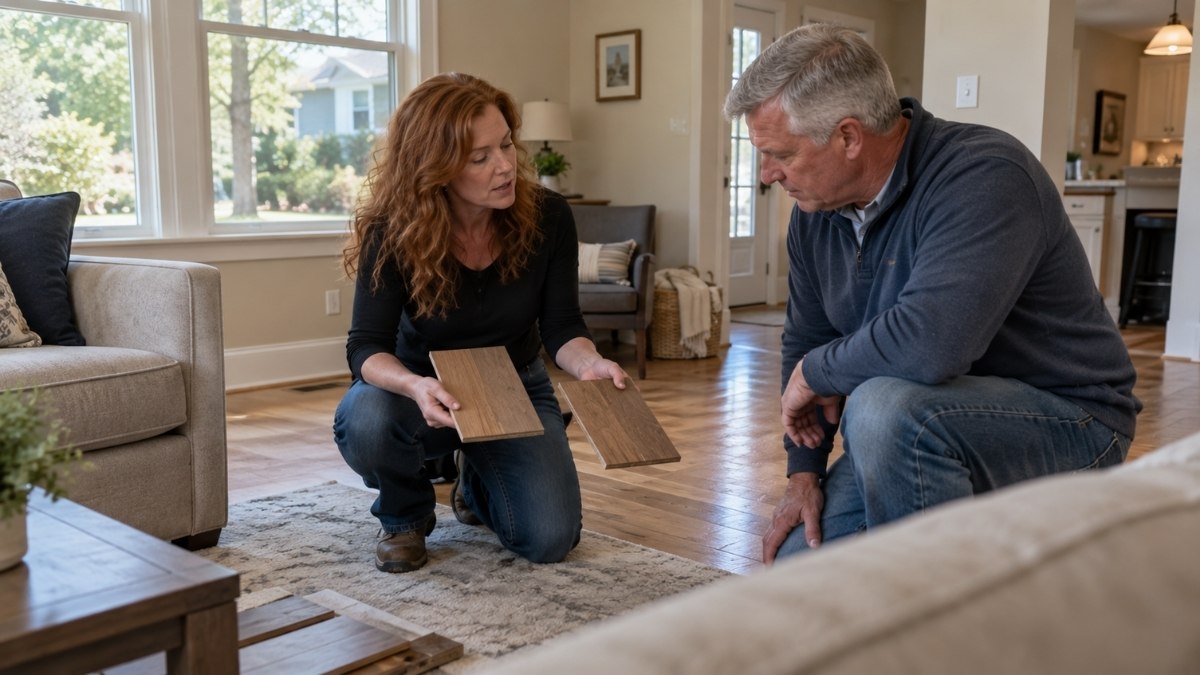
Installation methods vary by flooring material. Hardwood may require moisture testing and acclimation, while tile needs a stable base and a carefully planned layout. Vinyl can reveal uneven areas beneath the surface, and concrete coatings depend heavily on surface preparation and suitable environmental conditions.
When comparing flooring companies near you, ask for examples involving the same material, room type, and property conditions. Relevant experience matters more than a large but unrelated portfolio. Also ask how the installer follows manufacturer instructions and industry guidance. The National Wood Flooring Association’s installation guidelines emphasize evaluating jobsite conditions, substrates, and moisture before installing wood flooring.
3. Ask Exactly How the Subfloor Will Be Prepared
A floor covering cannot compensate for a weak, damp, damaged, or uneven base. Before providing a quote, the contractor should inspect the existing floor and discuss any concerns. Preparation may include cleaning, securing loose panels, patching, grinding, leveling, moisture testing, or removing incompatible residues.
Do not accept “prep included” without further details. Ask what the quoted price covers, which conditions could increase the cost, and how the contractor will document existing damage. A thorough answer indicates that the installer understands the entire flooring system, not just the visible surface.
4. Verify Local Registration and Insurance
Patterson is in Putnam County, where home-improvement contractors must register. Putnam County’s contractor registration materials list flooring, wall-to-wall carpeting, and tiling among the covered types of work. Ask for proof of current registration and liability insurance, and confirm that both documents display the same business name shown on the estimate.
The New York Attorney General advises homeowners to verify contact information, request references, confirm insurance, and compare quotes. These steps help establish who is responsible for the work and how the company can be contacted if concerns arise.
5. Compare Written Estimates Line by Line
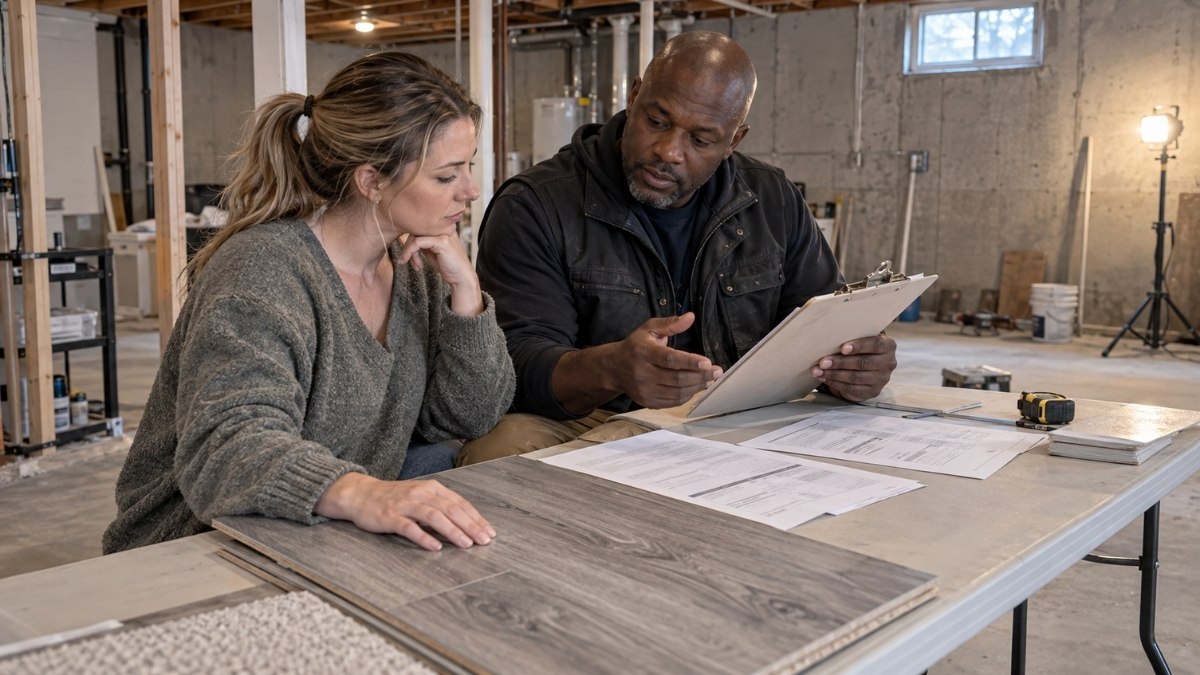
The lowest total may not represent the same scope of work. One estimate may include removal, leveling, trim, transitions, and cleanup, while another may exclude those services. Request an itemized proposal that identifies materials, quantities, labor, preparation, disposal, payment terms, and potential additional charges.
New York law requires a written contract for home-improvement work costing more than $500. Among other required provisions, the contract must include the contractor’s contact information, approximate start and completion dates, descriptions of the work and materials, and the agreed price. Do not sign an incomplete contract or rely solely on verbal promises.
6. Evaluate Communication Before Work Begins
Early communication often indicates how the project will be managed. Note whether the contractor arrives as promised, answers questions directly, explains the available options, and follows up in writing. Ask who your primary contact will be and how the company communicates schedule changes, delays, or previously hidden damage.
When evaluating flooring installation contractors near you, ask them to explain access requirements, dust-control measures, furniture responsibilities, curing restrictions, cleanup, and when the space can return to use. Specific answers improve planning and reduce misunderstandings.
7. Look for the Right Residential or Commercial Experience
Homes and businesses create different demands. Residential work may require furniture handling, room-by-room scheduling, pet planning, and family coordination. Commercial flooring may involve larger areas, heavier traffic, restrictions on work during business hours, additional safety procedures, or phased access.
Ask to see examples of comparable projects. A contractor who understands your setting can recommend practical materials, plan the workflow, and explain realistic access limitations without making broad performance guarantees.
How to Compare Flooring Contractors Step by Step
- Write one scope of work and give it to every contractor.
- Request material-specific examples, references, registration, and insurance.
- Ask each contractor to describe inspection and subfloor preparation.
- Compare itemized estimates for equal materials, tasks, and assumptions.
- Before signing, review the contract, payment schedule, assigned responsibilities, and process for approving change orders.
This process creates a more consistent basis for comparison. It can also reveal unusually low bids that omit essential work.
Frequently Asked Questions
How many flooring quotes should I compare?
Compare several quotes when possible. Give each contractor the same written scope so differences in price, preparation, materials, and responsibilities are easier to identify.
What should a flooring estimate include?
Look for material specifications, measured quantities, labor, removal, preparation, transitions, trim, disposal, payment terms, and conditions that could result in additional costs.
Is the cheapest flooring quote usually the best choice?
Not necessarily. A lower quote may exclude preparation, cleanup, or finishing work. Compare what each contractor includes and how clearly each company explains the proposed scope.
What are common flooring contractor red flags?
Watch for pressure to sign immediately, vague estimates, missing business information, registration or insurance that cannot be verified, large unexplained upfront payments, and reluctance to discuss subfloor preparation.
Should I ask questions before accepting a flooring quote?
Yes. Before accepting a quote, confirm the installation timeline, subfloor preparation, materials, warranty terms, cleanup responsibilities, and process for addressing unexpected issues.
Choose a Patterson Flooring Contractor With Confidence
The best flooring company in Patterson, NY, should have experience with your chosen material, property type, and installation requirements while providing clear documentation. Patterson’s Flooring Company serves residential and commercial clients with wood, tile, vinyl, concrete, and epoxy flooring services.
Request a consultation or free estimate to begin with a clear plan.