
What’s in This Guide
Quick Facts
- Professional installers prepare the surface before installation begins.
- Subfloor flatness, cleanliness, stability, and moisture affect finished-floor performance.
- Acclimation, underlayment, moisture, and expansion depend on the product.
- Layout planning helps manage alignment, cuts, doorways, transitions, and visual balance.
- Local installers can help with uneven subfloors, moisture concerns, and complex cuts.
Vinyl plank can look straightforward because many products use click-lock edges, but installation is only part of the work. Professional vinyl plank flooring installers evaluate the room, product, substrate, and transitions before the first plank goes down.
ASTM F710, the standard practice for preparing concrete floors to receive resilient flooring, says concrete should be clean, smooth, structurally sound, and tested for moisture. Manufacturer’s instructions should govern product-specific requirements.
For homeowners in Patterson, NY, these steps clarify what should happen before installation.
What Installers Check Before Installation
Subfloor Condition Comes First
An installer checks whether the existing surface can properly support the new vinyl floor. Wood subfloors may need loose panels secured or uneven areas corrected, while concrete may require repairs for cracks, residue, or low spots. ASTM F710 also calls for concrete substrates to be dry, clean, smooth, and suitable for flooring installation.
Moisture and Site Conditions Need Verification
Vinyl can resist water, but moisture below the floor may still cause problems. ASTM F2170 notes that excess concrete moisture can contribute to flooring failure. Installers may check moisture levels, temperature, and site conditions, especially in basements, kitchens, and laundry rooms.
Acclimation Depends on the Product
Acclimation requirements vary by LVP product. Some rigid-core flooring needs little or no acclimation, while other products must remain in the room for a set period. Installers follow the manufacturer’s instructions for acclimation, temperature, underlayment, vapor control, and expansion spacing.
Layout Planning Prevents Awkward Results
Installers measure the room and plan plank direction, row width, end joints, cuts, and transitions before installation begins. They also account for doorways, stairs, cabinets, and adjoining flooring so the finished layout looks balanced and fits properly.
Expansion Space and Fixed Objects Matter
Floating vinyl plank floors need the expansion clearance specified by the manufacturer. Installers maintain space around walls and fixed objects, then cover appropriate gaps with trim or molding. Cabinets, islands, pipes, and door jambs can affect how that clearance is handled.
How Professional LVP Installation Proceeds
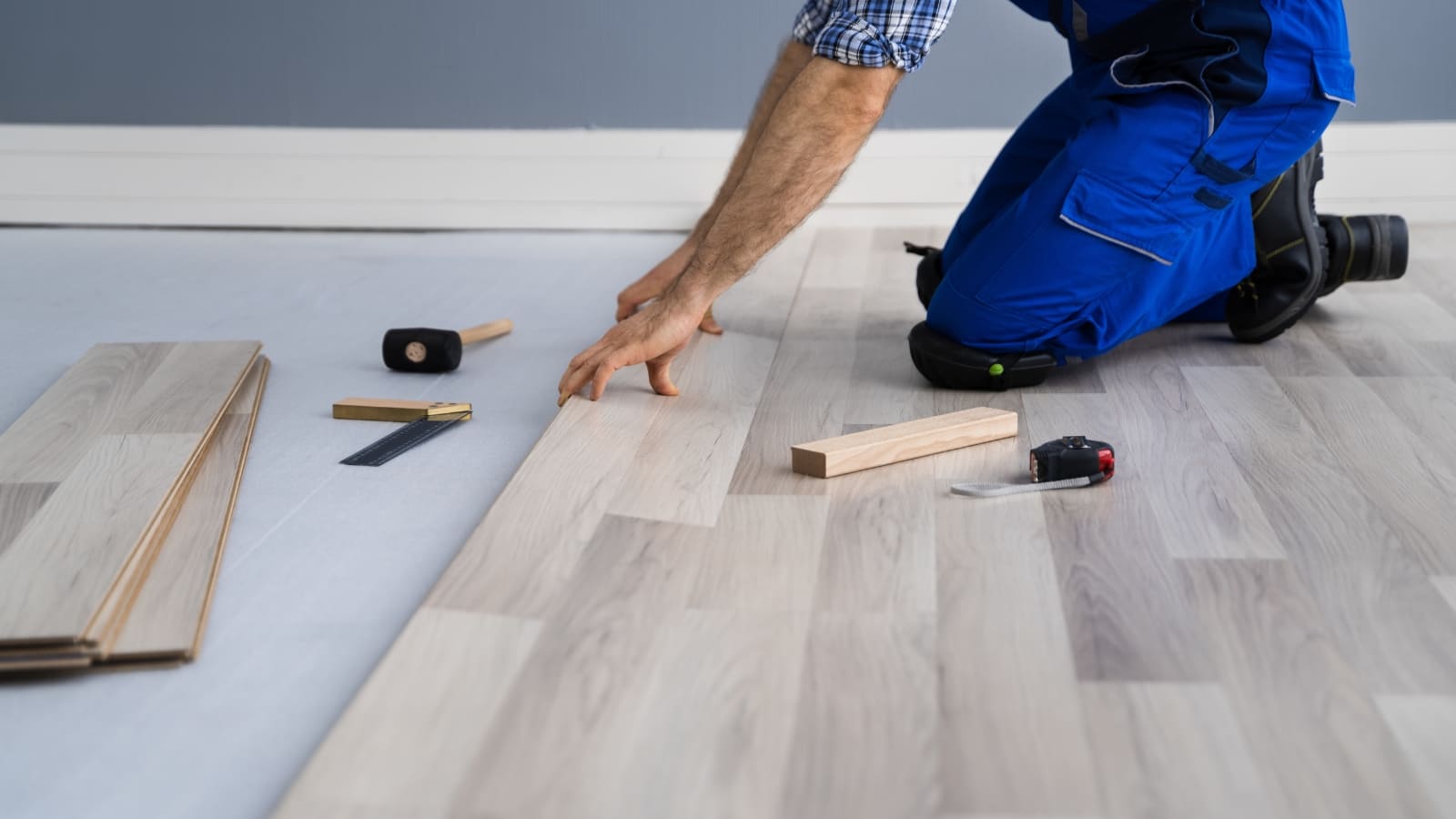
Step 1: Confirm the Product and Method
The installer verifies the flooring, locking system, approved substrate, underlayment, applicable adhesive requirements, and manufacturer’s instructions.
Step 2: Prepare the Subfloor
The crew removes debris, addresses loose or damaged areas, corrects unacceptable irregularities, and completes required moisture or substrate testing.
Step 3: Establish the Layout
Measurements and reference lines determine plank direction, balanced edge cuts, seam placement, doorway details, and transitions.
Step 4: Make Controlled Cuts and Install
Installers cut around walls, jambs, pipes, and obstacles while protecting required clearances. Floating planks follow locking-system instructions. Glue-down products require specified adhesive and application procedures.
Step 5: Finish and Inspect
The crew installs transitions and trim, checks joints and edges, cleans the surface, and reviews alignment and fit.
Moisture-Prone Rooms Require Extra Planning
Water-resistant flooring still requires careful preparation in moisture-prone spaces. Installers typically check the subfloor, room conditions, perimeter details, plumbing areas, and any underlayment or moisture-control requirements before installation.
Because vinyl products can have different installation specifications, professional planning should follow the needs of the selected flooring and the conditions of the room.
When Hiring Local Vinyl Plank Flooring Installers Makes Sense
|
Project Situation |
Why Professional Installation Makes Sense |
|
Uneven concrete or subfloor |
Installers can identify and address surface irregularities before laying the flooring. |
|
Questionable moisture conditions |
Professionals can determine whether moisture testing or additional preparation is needed. |
|
Old flooring removal |
Removing existing materials may reveal subfloor damage, adhesive residue, or other preparation needs. |
|
Connected rooms |
Careful layout planning helps maintain consistent plank direction, alignment, and transitions between spaces. |
|
Stairs |
Stair installations require precise measurements, cuts, nosing, and finishing details. |
|
Detailed cuts |
Door jambs, pipes, cabinets, and irregular walls often require more precise cutting and fitting. |
|
Floor-height changes |
Installers can plan suitable transitions where vinyl meets tile, hardwood, carpet, or other surfaces. |
|
Multiple transitions |
Professional planning can improve the fit and appearance between different rooms and flooring materials. |
Frequently Asked Questions
How much does vinyl plank flooring installation cost in Patterson, NY?
Pricing varies based on the flooring selected, project size, existing floor conditions, and any preparation required. Vinyl plank flooring installers in Patterson, NY, can evaluate the space and provide a project-specific estimate.
How long does vinyl plank flooring installation usually take?
Installation time depends on the size and condition of the space, the number of rooms, and the amount of preparation involved. Your installer can provide a clearer schedule after reviewing the project.
Should I move furniture before LVP flooring installers arrive?
It depends on what is included in the installation service. Ask your LVP flooring installers whether furniture moving is part of the project or whether rooms should be cleared before the crew arrives.
Can vinyl plank flooring work in commercial spaces in Patterson, NY?
Yes, vinyl plank flooring can be an option for many commercial settings. The appropriate product depends on the amount of foot traffic, intended use, maintenance needs, and other conditions within the property.
What should I confirm before booking vinyl flooring installation near me?
Ask what the estimate includes, such as flooring removal, furniture moving, trim work, cleanup, and other project-specific services. Confirming the scope beforehand can help avoid misunderstandings once installation begins.
Start Your Flooring Project
If you are planning vinyl plank flooring in Patterson, NY, Patterson’s Flooring Company can evaluate your space, discuss flooring options, and explain the preparation your project may require.
Request a consultation or get a free estimate to start your flooring project with a plan built around the room, substrate, and selected material.